As responsible pet owners and professionals in the animal care sector, we know that nutrition plays a critical role in a dog’s overall health and wellbeing. However, many dietary issues can go unnoticed until they begin to show through physical or behavioural changes.
Understanding the early warning signs of an unsuitable diet can help prevent long-term health complications and ensure dogs are thriving not just surviving.
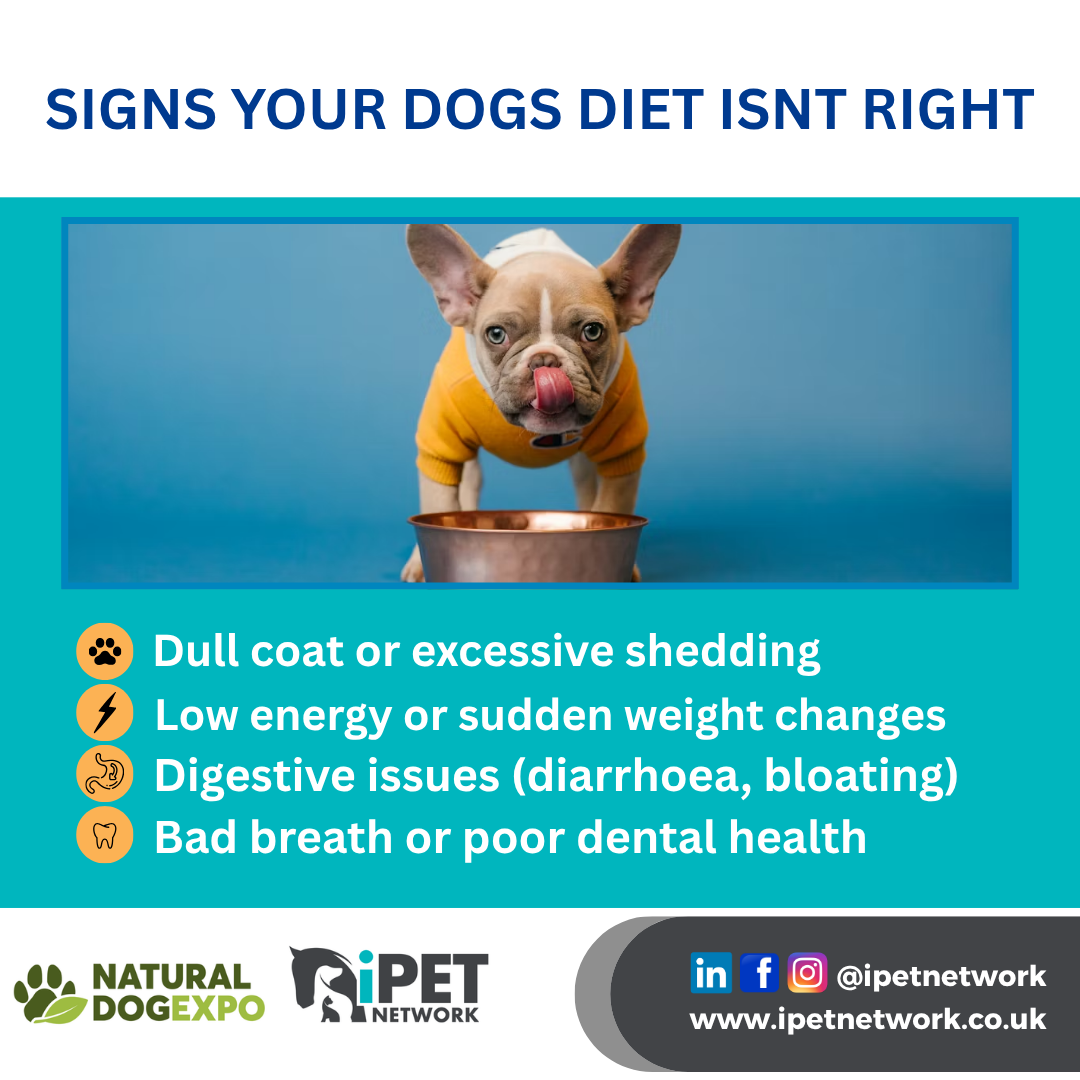
1. Dull Coat or Excessive Shedding
A healthy dog should have a shiny, soft coat. If you notice your dog’s coat becoming dry, brittle, or excessively shedding, this can often indicate nutritional deficiencies.
Common causes include:
A dog’s coat is one of the first indicators of internal health, making this a key sign to monitor.
2. Low Energy or Sudden Weight Changes
If your dog appears lethargic, less playful, or is experiencing unexplained weight gain or loss, their diet may not be meeting their energy requirements.
This could be due to:
Dogs require balanced nutrition tailored to their age, breed, and activity level. A mismatch can quickly impact performance and behaviour.
3. Digestive Issues (Diarrhoea, Bloating)
Frequent digestive upset is a strong indicator that something isn’t right with your dog’s diet.
Signs include:
These symptoms may result from:
Consistency in digestion is a key marker of a well-suited diet.
4. Bad Breath or Poor Dental Health
While dental hygiene is important, persistent bad breath can also point towards dietary issues.
Potential causes:
A well-balanced diet supports not only internal health but also teeth and gum condition.
Why Nutrition Knowledge Matters
For those working within the animal care and veterinary science sectors, recognising these signs is essential. Early intervention can improve a dog’s quality of life and prevent more serious health concerns.
At iPET Network, we emphasise the importance of practical, industry-relevant knowledge ensuring learners understand not just what to feed, but why nutrition matters.
Our qualifications support learners in developing:
Supporting Better Outcomes for Dogs
Whether you are a pet owner or a professional, being able to identify these warning signs allows you to take proactive steps – reviewing diet, seeking professional advice, and making informed changes.
Nutrition is one of the most powerful tools we have to support animal health. Getting it right makes all the difference.
To learn more about Canine Nutrition you can have a look at our Ofqual Regulated Qualification!
The iPET Network Level 3 Diploma in Canine Nutrition
Come and see us at the Natural Dog Expo on April 25th-26th! Where we will be speaking more in depth about all of our qualifications!